Podcast: Early Reading Classrooms – Coaching “Look For’s”

Early Reading Classrooms- Coaching “Look For's"

Dr. Heather Kenny, a past kindergarten teacher, reading interventionist, consultant and higher education teacher-educator, explores how school leaders and coaches can support teachers of early readers.  She is the President of Unleashed Innovation, Inc. and the creator of Sounder & Friends,™ an educational adventure show to develop learners’ phonemic awareness. Dr. Kenny identifies desired student learning behaviors to build foundational reading success.


Watch an episode of Sounder and Friends here.
Contact Dr. Kenny here.

Subscribe to the Steve Barkley Ponders Out Loud podcast on iTunes or visit BarkleyPD.com to find new episodes!

PODCAST TRANSCRIPT

Steve [Intro]: 00:00 Hello and welcome to the Steve Barkley Ponders Out Loud podcast. Instructional coaches and leaders create the environment that supports teachers to continually imagine, grow and achieve. They model an excitement for learning that teachers in turn model for students. This podcast is dedicated to promoting the important aspects of instructional leadership. Thanks for listening.

Steve: 00:28 Early reading classrooms – coaching look for’s. Joining us today is Dr. Heather Kenny, a past kindergarten teacher, reading interventionists, consultant, and higher ed teacher-educator. She’s the president of Unleashed Innovation, Inc. and the creator of Sounder and Friends, an educational adventure show that develops learners’ phonemic awareness. Welcome Heather.

Heather: 00:56 Thank you, Steve. Glad to be here.

Steve: 00:58 Heather, I’m wondering for a starter, if you’d tell us what led to your focus and study of phonemic skills.

Heather: 01:07 Absolutely. So when I completed my teacher education program, I won’t tell you how many years ago, but I was acutely aware of the fact that I had no clue how to teach students to read. I knew how to plan literacy lessons, but that was not the same as understanding how children learn to read. So I breathed a huge sigh of relief when my first job was in kindergarten because in those days it was the first grade teacher’s job to teach kids read . But I was very fortunate because early in my teaching career, I was partnered with an experienced mentor and she was completing her course work for her master’s degree. And she, in my very first year of teaching, introduced me to that concept of phonemic awareness, which at the time, none of the teachers that we knew could even pronounce the term, let alone have any understanding of it.

Heather: 01:55 It was really just a speech and language pathologist who we could have conversations with. But once we started teaching what we referred to to as a phonemically driven literacy program, it takes a letter to sound approach, and we had enormous success with that. We were focusing on the sound and then teaching children how those sounds mapped to letters. And traditional instructional approaches do the opposite. They actually take a letter to sound rather than a sound to letter approach. So for example, we’ll often hear teachers in early primary classrooms saying, “what sound does that letter make?” Well, letters don’t make anything. They’re just visual representations of the sounds that we hear in our spoken language. And for students to become fluent readers, they need to be able to hear and identify and differentiate between those sounds and spoken words.

Heather: 02:48 After all, it’s a single sound that means the difference between one word and another. Cat to coat, to cot to kit. And we need to teach students not only to be able to hear and differentiate those sounds, but we need to teach them how those sounds are spelled. So, as I mentioned, we had great success using this approach with beginning readers. And then later as an interventionist, I took those same principles of instruction and applied them to my work with older struggling readers. And virtually every struggling reader that I have worked with in grade three and above Steve, has had phonemic awareness deficits. And the statistics are quite shocking. As many as 85% of reading comprehension problems can actually be linked back to a lack of phonemic awareness, because if we don’t have those skills, then we’re not able to read fluently and automatically. And if we can’t read fluently on automatically, we can’t attend to the message that the author’s trying to convey. But I did find in my private practice that once students developed anemic proficiency, and then we filled in any holes or deficits and phonics knowledge, they were then able to make very rapid gains in both word recognition and reading fluency.

Steve: 03:58 I tell you Heather, you triggered a piece of history for me. I started my teaching career in grades four, five and six, and then after six years transferred to teach first grade and of course had no idea about teaching beginning reading. And fortunately, I was teamed with an experienced teacher who held my hand and helped me along the way. But I realized, oh man, if I were to go back to grade five and six, I would’ve been much a much greater support and help to my struggling readers. I just didn’t know enough as a grade five and six teacher, what those missing components were for those students and I was trying to build without having it. That was just ringing in my head as I listened to you.

Heather: 04:55 And I think that’s a common experience, Steve even now, unfortunately, but that’s our job, right? As teacher educators and consultants and so forth that to help teachers build that foundation and knowledge and be able to recognize when there are holes in that foundation.

Steve: 05:14 Heather in my coaching work, I place a lot of attention on observing students engaged in learning. It’s what I like to call learning production behaviors. What’s the learner doing that’s gonna cause the learning to happen? And I’m wondering if you’d share your thoughts with a focus on what coaches and administrators would hope to see students doing related to the internalization of phonemic skills. I’m wondering if you might kind of timeline it for us. So if we’re in those early childhood classrooms, what would we hope to see? And then as the grades go up, if we’re watching the kids, what is it we’re looking to see the kids doing?

Heather: 05:57 =Absolutely. That is such a great question. So I think first and foremost, it’s important that we realize that spoken language proceeds written language. So the alphabet that we used to communicate in writing was actually devised for the express purpose of representing speech sounds. So when we think about literacy instruction and those learning production behaviors, that idea of speech to print, we wanna see that at all grade levels. So for example, in the preschool years, of course, children do and use the strategies that we teach them. So we have to be careful about what we’re teaching them in the first place. And then we wanna make sure that children are adopting or appropriating those behaviors as their own. So in the preschool years, we wanna make sure that children develop that awareness of sounds and spoken language. And we can do this by reading books or singing songs, playing games that promote rhyming and alliteration.

Heather: 06:52 Once we begin introducing letters, we can do so from that perspective of speech to print. So for example, what sound you hear at the beginning of moon? Can you hear the, mmm sound? What should your mouth do when you make that sound? Can you feel your lips pressed together? Now, I’m going to show you how we spell that sound mmm. We use the letter M and here’s how we write the letter M. So we always wanna make sure that we’re connecting – before we’re talking about letter symbols, we always want children to be listening for those sounds and then making those connections. And one of the really powerful teaching tools that we can use in those early learning classrooms and with older struggling readers as well, who have difficulty hearing those sounds is using mirrors so that they can actually watch their mouth.

Heather: 07:35 If I’m doing this kind of training the classroom, I wanna make sure that all of my students are looking at my mouth, that they’re mouthing those sounds along with me. And we also want to see, especially in that those preschool and kindergarten classrooms, we wanna see that awareness of spoken language infused in children’s conversation and their conversations around literacy, but also in their spontaneous play, because that’s that I’ve certainly observed. When I was teaching kindergarten and playing all these phonemic awareness games in the classroom, I would have parents come in say to me, “why is my kids sounding me out at home?” , you know, whenever I get in trouble, I hear “Dad, s-t-o-p it!”

Heather: 08:18 So we know that when children are playing and interacting, they’re drawing upon the things that make sense to them. So we really wanna see these spontaneous interactions. When children move on to kindergarten and first grade, instruction should continues to honor that speech to print relationship between sounds, but now the more complex spelling patterns. And we need to make sure that we’re avoiding instruction that really requires rote memorization of words. So I know a word wall has been a fixture in most classrooms for the last several decades but unfortunately the way they’re typically used is not highly effective because it encourages children to try to memorize those words. And honestly, in all of my years teaching, I have seen hundreds of word walls. I have never seen a child spontaneously go to the word wall to try to figure out the spelling of the word, because you have to know how it’s spelled before you can even find it.

Heather: 09:12 So it’s teacher friendly in terms of the way it’s organized, but it’s not student friendly. However, if we flip that and we provide students with access to a sound ball, so that we can actually see how that sound is pronounced and then give a variety of spellings for that sound, we will see children actually looking in mirrors, looking at what their shape looks like, mouth position looks like, trying to find that sound up on the wall and then looking at the various spelling patterns. So providing students with the resources that they can actually independently access, I think is very important. We should also see students decoding and encoding words like meaning sounding out words, right? Whether they’re reading or they’re spelling, we wanna hear those sounds in the words. And when they’re reading words, we wanna make sure that they’re actually looking intently at the word rather than looking at the pictures or jumping around on the page or looking up at the teacher.

Heather: 10:09 because all of the information that they need to decode that word is contained in the letters, symbols themselves. If we take a away the pictures, if we take away the context, if we take away the teacher, we’re still left with that string of letters, and that’s what students really need to attend to. And if we do see students that are glancing up around at the room or looking up at the pictures and so forth, then that gives us a little bit of pause. We wanna make sure we’re checking to make sure that they have both the knowledge and the skills that they need in order to be able to decode words. And as students experience success with this, then over time, we wanna see them identifying larger and larger chunks of letters accurately and automatically. So we wanna make sure that reading proficiency starting to develop and reading fluency. And there’s an important concept called orthographic mapping, which David Killpatrick defines as, a mental process that we use to permanently store words for immediate and effortless retrieval. And his work suggests that if students in second grade and above have developed the
requisite phonemic proficiency, they will be able to recognize words automatically without sounding out after only one to four exposures. So if we observe students who despite many exposures to words are still miscuing or still hesitating on those words, then we have to examine our instructional practices. Chances are, these are the students who need to further develop their phonemic awareness skills.

Steve: 11:40 That last piece I need you to lay out for me again. So because they don’t have the phonemic awareness, they can’t store the whole word as the map.

Heather: 11:51 Exactly.

Steve: 11:51 Having that phonemic awareness is part of being able to store the whole word as the map.

Heather: 11:56 Right. It’s that brain-based process and students need those phonemic proficiency in order to be able for their brain to be able to store that word for that automatic and effortless retrieval. And we always wanna look at student spelling ability as well, because that lays out in black and white, what students’ understandings are about how letters are used to represent sounds.

Steve: 12:21 There’s a a sign that I read years ago in a staff lounge that is ringing back to me as I listened to you. And the sign said, “teaching reading is rocket science.”

Heather: 12:35 Yes. That that’s actually a really famous quote by Lisa Motes and it’s very true. There’s so much to think about and so much to know in order to be able to teach proficiently. But the exciting thing is, is that these reading is a skill and any skill is something that can be taught, it can be learned, it be mastered, it can be practiced. Obviously, some of us are going to have more of a natural inclination than others and some of us are gonna need more practice to develop that proficiency, but it is definitely a skill. And I find that exciting to know that once we convey that to students that you can do this, we might need to help you develop some of the sub skills that are needed for success, but, with the right support and with enough practice, we can get virtually any child to read proficiently.

Steve: 13:25 And fair to say that the research is being done to help us get better and better and better at it?

Heather: 13:32 Most definitely.

Steve: 13:34 I’m wondering if you’ve got some thoughts on how school leaders can best support parents in parents learning about what to do with
early reading?

Heather: 13:45 Mm-Hmm. So when parents think about early literacy, they typically think about teaching children their ABCs, and if school leaders can help to shift the understanding, that would be really helpful. They can certainly help spread information about the importance of attending to those speech sounds by sharing resources, such as Sounder and Friends by publishing articles in school newsletters, or hosting information nights, any type of community outreach that’s going to help communicate this to parents. But really, and truly Steve, I think the single most important thing a school leader can do is to ensure that teachers have that clear understanding of that speech to print relationship and the importance of teaching phonemic or skills to mastery. As you just mentioned, you know, teaching reading is rocket science, and it’s not fair to put that in the hands of parents. We can certainly help parents under understand what they can do to support their child in terms of their reading development. We don’t wanna be sending home those lists of spelling words where children have to recite, you know, “though” T H O U G H. We don’t wanna be doing that anymore, but those are the kinds of activities that are typically generated by the classroom teacher and sent home to the parents. So once teachers have that knowledge, that’s going to inform all of their conversations and communications with parents.

Steve: 15:04 Any last thoughts you’d like to share with school leaders on how we can best be supporting the skills of readers at our schools?

Heather: 15:16 Well, as we both know, school leaders have a powerful influence over classroom practices over curriculum and instructional materials. So it’s really important that they are well informed about what constitutes highly effective reading instruction. And they also need to understand the knowledge base that teachers need in order to provide that highly effective instruction to students. Not all reading instruction is created equal, and I have worked with a lot of very talented, very dedicated administrators who walk by classrooms and don’t realize that the type of reading instruction that’s going on is actually counterproductive. So a lot of the common instructional practices essentially teach kids to guess at words, rather than to decode or to read them. And these practices can actually hinder children’s long term reading development. In fact, some researchers call it an instructional disability because they were never taught how to recognize words in a way that will enable their brain to be able to retrieve those words effortlessly and automatically.

Heather: 16:19 So if school leaders know what high quality instruction looks like, things like that sound wall that I was talking about, things like making sure that when children are reading words, they’re actually saying the sounds in the word, or they’re leaning in to look very carefully at that word on the page, rather than looking up at the word wall or looking around pictures or looking to the t-shirt for the answer. So once school leaders know what that instruction looks like, then they can help to ensure that that type of high quality instruction is provided to all students in all grade levels and across all tiers of support. So promoting that knowledge amongst teachers, and then promoting that alignment between our basic tier one instruction, our tier two and tier three, I think would be tremendously powerful.

Steve: 17:06 Thanks Heather. As we wrap up, you wanna let folks know how they can be in touch with you and find out the resources that that you have available?

Heather: 17:15 Most definitely. So to connect with me, anyone is welcome to check out our Unleashed Innovation website. It’s at www.unleashed-innovation.com. You can certainly reach out to me directly. We also have Sounder and Friends, which is our educational adventure series and free app, which is intended to help promote these skills amongst our earliest learners. And those episodes are featured on pbs.org and on the National Center for Improving Literacy’s Kid’s Zone. You can also find us on our own designated YouTube channel, and the app is available for free download via Google play or the app store. We also post a lot of helpful resources, including games and activities on our various social media platforms. So we invite anyone who’s interested to follow us on Facebook and Instagram, or to visit the Sounder and Friends website at www.sounderandfriends.com

Steve: 18:14 Thanks Heather, appreciate all your all your input.

Heather: 18:18 Thank you so much, Steve. It was a pleasure speaking with you.

Steve (Outro): 18:23 Thank you for listening. You can subscribe to Steve Barkley Ponders Out Loud on iTunes and Podbean. And please remember to
rate and review us on iTunes. I also want to hear what you’re pondering. You can find me on Twitter @stevebarkley, or send me your questions and find my videos and blogs at barkleypd.com.

Podcast for Parents: Building Reading Success With Sounds

Building Reading Success With Sounds

Heather Kenny, a past kindergarten teacher and reading teacher educator, has developed a children’s adventure show called Sounder and Friends™ to promote beginning reading skills. Heather shares with parents ways to build sound awareness for successful reading. She also includes how parents can spot indicators of children’s missing skills that warrant sharing with teachers.

Watch an episode of Sounder and Friends here.

Find the free App and other resources on the Sounder and Friends website.

Visit the Sounder and Friends Facebook page here.

Subscribe to the Steve Barkley Ponders Out Loud podcast on iTunes or visit BarkleyPD.com to find new episodes!

PODCAST TRANSCRIPT

Steve [Intro]: 00:00 Hello, and welcome to the parents as learning coaches edition of the Steve Barkley Ponders Out Loud podcast. Parents and caregivers play many different roles, at times, even somewhat conflicting roles as they support children’s development. The pandemic has shown a light on the importance of parents supporting learners. In this podcast, I’ll look to share my experiences as a teacher, educator, parent, grandparent, and continuous learner that can support your coaching efforts.

Steve: 00:33 Building reading success with sounds. Joining the podcast today is Heather Kenny, a past kindergarten teacher and reading teacher educator. Heather has developed a children’s adventure show called Sounder and Friends to promote beginning reading skills. Welcome Heather.
Heather: 00:50 Thank you, Steve.

Steve: 00:52 Tell us a little bit about Sounder and Friends and your motivation to to produce it.

Heather: 00:58 I would love to. So as you mentioned, Sounder and Friends is an animated educational adventure series and now is a free app that focuses on the most important early reading skill that most parents have never even heard of. And that’s a skill called phonemic awareness, which is the ability to hear and to play with the sounds in spoken language. So let me give you just a couple of examples. If I were to say the sounds, D-O-G, you could blend them together to form the word dog, and that’s called phonemic blending. If I said the word, C-A-T, you could pull apart that word into the sounds cat, and that’s referred to as phoneme segmentation. Phonemic blending and segmenting are the skills that are are associated with those early stages of reading development when children are reading by sounding out and spelling by sounding out. Another important skill is called phoneme substitution.

Heather: 01:54 So if I asked you to change the sound A in the word whale to the sound E you would have a wheel. And being able to substitute or delete and words in spoken words, is a skill that’s associated with reading fluency. So as I’ve just demonstrated, phonemic awareness has nothing to do with letters or with printed words. Even so, it is the most powerful predictor of a child success in learning to read, even more so than a knowledge of letter names and sounds. And every parent I know knows the importance of teaching children their ABCs. I’ve had lots of opportunities to witness parents doing that, which is wonderful, however, phonemic awareness is actually even more important. So early on in my teaching career, I learned about the importance of phonemic awareness and my teaching partner, Laura Robbins and I, developed a series of games to teach our students these skills.

Heather: 02:47 And what we found was that children loved playing with words in this way. And even more importantly, they had great success in applying those skills to their reading and spelling. And when we talked to the parents of our students about these concepts, they immediately understood the relevance to literacy development. But somehow in the broader community, no one had ever heard of it. And unfortunately, certainly back in those days, not all teachers were teaching those skills to the level of proficiency that was needed for fluent reading. So Laura and I decided to make it our mission to help young children develop these skills in a fun and playful way, and to help the adults in their lives develop that understanding of the importance of it. And it’s our belief that if children begin to develop these skills before reading instruction begins in earnest, then that instruction can be productive and children can experience success right from the start. So that’s what Sounder and Friends is all about. It’s about teaching reading right, right from the start.

Steve: 03:47 Heather, as I’m listening to you, there’s a question going through in my head, so straighten me out if I’m off on it. But it kind of sounds like hearing the sounds different – is that the earliest stage or it’s a critical step that happens as well as being able to see it and reproduce it?

Heather: 04:10 Right. It is a critical step that happens. And it develops in parallel with knowledge of letter names and so forth. And so initially, and in order for children to be able to sound out words, to read them or pull words apart in order to spell them, that’s when children need those basic phonemic awareness skills. And then those skills can be further developed through reading instruction, especially reading instruction that really attends to those letter sound combinations. So, we’re not going to necessarily teach them completely separately. We want those two things to happen in parallel, but there are many children with deficits in what we call the phonological component of language, meaning they have difficulty hearing. When I say the word cat, they hear it as sort of one big sound chunk.

Heather: 05:03 And I like to correlate it with, for example, I am nearsighted. So when I look out at my neighbor’s house, I see the sea of red. I’m not able to, until I put my glasses on, see those individual bricks that make up that big house. So children hear this big chunk, but they aren’t necessarily able to tease apart those individual phonemes. And of course, written language is actually built on using letters to represent those individual sounds in spoken words. So unless we have an understanding of the sounds, unless we can hear them and pull them apart, then we’re not able to use letter symbols efficiently to be able to represent them.

Steve: 05:39 So Heather, I’m wondering if you could share some focus point for parents about exploring phonemic sounds with youngsters and I’m wondering if you could put it on a continuum here for us starting with preschoolers and then kind of progressing through the elementary grades.

Heather: 05:57 Certainly. And Steve, I love that you used the word explore because that’s what we wanna encourage young children to do, to really explore those sounds in our spoken language, by listening and identifying the sounds and also by noticing what it feels like to produce those sounds. So often as parents and as skilled readers, our first instinct is to draw children’s attention to the letters and words. But we need to realize that the order of letters in the word really has no meaning to a child unless that child is able to hear and identify the corresponding sounds in that word. So I’ll give you a quick example. I was at the grocery store recently and I saw a mom pushing her young son in a grocery cart
through the dairy section, and she stopped and pointed to a sign that read milk. And she said, look, M-I-L-K, that spells milk.

Heather: 06:45 And my first thought was, isn’t this wonderful, that’s phenomenal. This mom really cares about her child’s literacy development. She’s taking advantage of this teachable moment. And then my next thought was darn it, I wish I could just tell her about phonemic awareness because that interaction would’ve been that much more impactful if she had started by guiding her child to explore the sounds in the word. Let’s listen for the sounds in the word milk. What sounds you hear at the beginning? What sounds you hear at the end? What does it feel like to say that, “mmm” sound? Now let’s look for the letter that spells the sound “mmm.” So that’s one of the ways that we can really help children, if we pay attention or kind of privilege the sounds that we hear and then make connections to those letter sounds, we can really support young children’s reading development.

Heather: 07:36 Another really quick great game to play is I Spy. So instead of saying, I Spy something red, I can say, I Spy with my little eye, a house or a car and I’m going to encourage my child to shout out house or car. And then of course, once the children get the hang of it, you can encourage your child to spy something. And even if they don’t pull apar the sounds perfectly, that’s not important. The important thing is that we’re developing this love of language and promoting this awareness and exploration of sounds. Now for older children, it can be fun to play games that require identifying isolating or manipulating sounds. A game I like to recommend for second grade and above is called last to first.

Heather: 08:29 So I say word like tree, and then the child has to identify the last sound in that word, that would be the sound E and then think of a word that begins with that sound. So the last sound now becomes the first sound. So we go from tree, to E, to Eagle, and then it would be my turn to think of a word that begins with sound “Le,” which is the last sound in Eagle. So it’s a really great way to help children develop those really robust phonemic awareness skills that they need for long-term reading proficiency. And one of the things that I love about awareness games is that they can be played anywhere. You don’t need any materials. You can be driving in the car, you can be sitting and sitting at the doctor’s office or waiting at a bus stop. These games are lots of fun, they’re easy to play, and then they help children develop those skills that they need for reading success.

Steve: 09:16 Heather, I’m wondering if you could point out for parents of older students, some signs or signals that they might spot that would suggest their child is missing some of that phonemic understanding and be able to raise that concern with a teacher.

Heather: 09:35 Certainly. So one of the early predictors is rhyming ability. So if you notice that your student, once they’re beyond those early primary years has difficulty with rhyme, that can be an indicator. But students who have phonemic awareness deficits typically have difficulty with that automatic fluent word recognition. And there does come a point in time where I think we as adults tend to assume that children have reading ability and we let them read silently. But it’s really a good idea to make sure that your child reads aloud to you every so often, especially materials that are considered to be at their grade level. And if you’re noticing that there are a lot of misread words or that the child’s reading is kind of halting or hesitating, and it doesn’t sound natural, that’s a good point to talk to your child’s teacher about

Steve: 10:21 Thanks, Heather. Before we wrap up, tell parents where they can find Sounder and Friends and other resources that you have available.

Heather: 10:29 I would love to. So our Sounder and Friends episodes are featured on pbs.org and on the National Center For Improving Literacy’s Kid Zone. And you can just use Sounder and Friends as a search term. But the easiest way to find us is just to go straight to our YouTube channel, type in Sounder and Friends, and you can view our episodes. Or you can visit Google Play or the App store to download the free app. It’s called Sounder and Friends, The Game, and it should pop right up. We also post a lot of helpful resources, including games and activities on our social media platform so we would love for parents to engage and interact with us. Follow us on Facebook and on Instagram. And these resources are also posted on our website at www.sounderandfriends.com.

Steve: 11:15 Thanks, Heather. Appreciate it. I’m sure parents are gonna be searching and checking that out.

Heather: 11:21 Thank you so much, Steve.

Steve [Outro]: 11:26 Thanks for listening in folks. I’d love to hear what you’re pondering. You can find me on twitter @stevebarkley or send me your questions and find my videos and blogs at barkleypd.com.


Helping

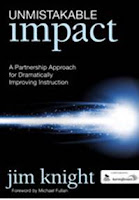
Jim Knight’s new book, Unmistakable Impact: A Partnership Approach for Dramatically Improving Instruction is my current airplane companion. I am just part way in and can already recommend it for coaches and teacher and administrator leaders. In addition to sharing his own insights and thinking, Jim provides extensive lists connecting the reader to other authors and resources.

In Chapter 2 (Partnering), Jim identifies five simple truths about HELPING: Here are his five along with my thinking on each:

1. People often do not know that they need help.

In my work I label these folks unconsciously unskilled. They don’t know that they don’t know-all of us are unaware of some skill set that we are missing. Coaches create awareness. This could be done with data, video clips, modeling, observations notes, student work, etc. When we cause those we are coaching to become aware, we produce discomfort. That discomfort is often the motivation for change. (A stack of photos lead to my decision to start and maintain a weight plan!)

This is especially critical when working with GOOD teachers. Many leaders find it difficult to bring the discomfort of consciousness to these staff members. Being aware that my students could achieve more can make me uncomfortable continuing my current practice and start my exploration of alternatives.
2. If people feel “one down” they will resist help.

Jim states that skillful coaches create equality between themselves and their collaborating teachers. (pg 23). I recommend that coaches avoid using the word help (as in “How can I help?”) unless the teacher uses it first (as in “Could you help me design…?) One common phrase that I use in pre-conferences to avoid help is, ”What role might I play?”. My experiences match Jim’s truth- offering help raises the helper above the coached.

3. Criticism is taken personally.

When you suggest that a person change what one is doing, there is an inherent tug on the ego (“I’m not good enough”). In my pre-conferences I focus on identifying traits and values that are important to the teacher. I look for those items during the observation and share them during the post conference to build teacher ego. (See approval in an earlier blog) This often sets the stage for the teachers to do the thinking necessary for self discovery.

4. If someone else does the thinking for them, people will resist.

I use the “who is thinking” as an indicator of the difference between evaluation and coaching conferences. Evaluators observe, identify, analyze, problem solve, and suggest while the teachers listens. Coaches observe, question, paraphrase, ask “Why?”, and “What do you think?”. Thinking is empowering…asking me to think is uplifting.

5. People aren’t motivated by other people’s goals.

My description is that ideal coaches stop outside the door of the classroom, take off and hang up their agendas, put on the teacher’s agenda and enter. However, the best coaches can do is to work to understand the agenda of the teacher in pre-conference conversations. Then frequently and consciously look at the classroom through the teacher’s lens. An example is the secondary literacy coach who avoids stating to the math teacher, ”All teachers are teachers of reading(coach’s agenda).” She instead identifies the difficult vocabulary that the math text uses, allows the math teacher to describe how students struggle with word problems and share a desire to find strategies to increase student success (teacher’s goal). The reading coach’s goal surfaced as a connection to the math teacher’s goals. Partnership!

When I am asked how to identify teachers who would be successful coaches I recommend looking for people interested in learning about teaching and learning. When I enter your classroom interested in learning with you rather than helping you a partnership climate is easier to establish.


Readicide

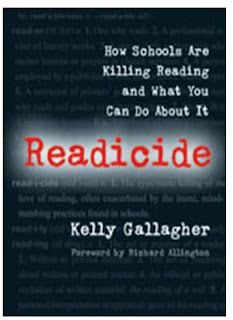
With all of my flying time I recently had the chance to read Readicide: How Schools Are Killing Reading and What You Can Do About It by Kelly Gallagher.

Readicide had been recommended to me in a recent coaches’ workshop but my interest in reading it was enhanced as I just finished working with a high school that has 60plus percent of their students needing intensive reading courses.

Gallagher, a high school English teacher in Anaheim, CA and author of several books on teaching reading and writing, argues that our instructional practices in all content areas as well as in reading and English classrooms are killing reading.

Here are a few of the spots I highlighted in my reading:

In an earlier blog, I noted parents’ use of vocabulary with preschoolers and its impact on learning. Gallagher states, ”If those students who enter schools linguistically impoverished — thirty –two million words behind—do not read extensively, they will never catch up. This bears repeating: struggling readers who do not read voraciously will never catch up.” This creates a challenge for teachers who need to convince the students who least want to read … to read a lot. Gallagher’s own survey identified that seniors reported reading on average 13 minutes a day at school (outside of his English class). Generally students who needed reading practice most, read less.

Does it makes sense that many schools have dropped sustained silent reading when data suggest that on average Americans fifteen to twenty-four spend only seven minutes of their leisure time on reading?

Gallagher shares a classroom occurrence of his that illustrates the problem of students lacking sufficient authentic reading experiences. Students reading an article stopped him and asked for help with understanding the phrase, “ the lifeblood of al Qaeda”. His first probing question to the students elicited the concern, ”We don’t even know who this Al guy is.” Gallagher provides other examples from his students and concerns from other teachers that illustrate high school seniors, soon eligible to vote, lack sufficient background knowledge to be full participating citizens.

How can teachers respond?
Gallagher institutes an “Article of the Week” assignment sending students to real world news stories, essays, editorials, blogs, and speeches. (See a listing with links to recent articles he uses) A classroom set of Newsweek provides Gallagher’s students with a real world text reading assignment one night a week. I have personally seen less authentic reading tasks in classrooms as teachers increase test prep activities.

Readicide concludes with a list of concrete steps teachers can take to develop recreational and academic readers. Both are critical.

Gallagher recommends bringing the books to the students. He has 2000 books in his room and list 100 books his students love in his appendix. Larry Ferlazzo’s blog shares how he has students review 100 books on the opening day of school to identify interest and select a first read for the year.

A teacher like Gallagher or Ferlazzo would have been a great addition to my high school reading practices!


What Does Satisfactory Mean?… What Does it Tell You

In my last posting I noted that I am reading David Perkin’s, Making Learning Whole. In Chapter 5, Working on the Hard Parts, he examines the role of feedback in learning. He describes the problem with what he calls the hearts-and–minds theory: “Take it to heart, keep it in mind, and do better next time.”

Perkins (pages 80-81) identifies that a hearts-and-minds approach assumes that:

  • learners care enough to improve, even though the class is moving on to the next topic
  • learners will remember the input and use it in the future
  • learners understand sparse feedback and can use it effectively
  • learners will have the opportunity to try again soon.

This suggests to me that much teacher feedback on students’ tests and papers may be wasted teacher time.

Similarly, much administrator time spent in formal teacher evaluations may be wasted time. Consider the following taken from Stephen Sawchucks’ writing for Education Week (6/1 online- 6/10 in print), Grade Inflation Seen in Evaluation of Teachers, Regardless of System.

The districts that employed a binary rating system granted 99 percent of tenured teachers a “satisfactory” rating. In systems with more than two categories of ratings, 94 percent of teachers received one of the two highest ratings.

The evaluations also appear to have failed as a method for offering professional development tailored to individual teachers’ needs. Seventy-three percent of the teachers surveyed said their evaluations did not identify an area for development. Only 43 percent said the evaluations helped them improve.

Nor did the systems serve to remove ineffective teachers. For instance, only 10 percent of Denver schools missing standardized-testing goals under the federal No Child Left Behind Act issued an unsatisfactory rating to a teacher over the past three years. Yet 81 percent of administrators and 58 percent of teachers in the districts surveyed said a tenured teacher in their school was performing poorly, and 43 percent of teachers said a colleague should be dismissed for poor performance.

Many of the administrators may be practicing a heart-and–mind theory of feedback.
“Take it to heart, keep it in mind, and do better next time.”

Perkins shares (page 84) that one of the dilemmas of ongoing assessment for teachers is the lack of time. Teachers do not have the time to provide all the feedback that students need for quality learning. He suggests that students evaluating one another’s work and evaluating their own work with rubrics can provide valuable feedback. He believes that students can learn as much from assessing as being assessed.

I’m personally convinced that when students take some responsibility for each other’s learning, student achievement increases. The teacher’s role is to orchestrate that interpersonal relationship.

Principals face the same time dilemma in getting sufficient feedback to teachers. So developing the interpersonal relationships of teachers in professional learning communities and peer coaching becomes a critical administrator responsibility.

Last summer, I shared that teachers at the Enka School in Istanbul, Turkey had completed training in coaching and begun initial practice. Here is one teacher’s recent report that illustrates receiving additional feedback and perhaps more importantly increased reflection from coaching.

I benefited from both coaching and being coached. My coach made me see some missing points in my teaching. With the help of my coach I could change some strategies, try them and see the best regarding my class’ needs.

For the coaching part, I could see different strategies and methods. I had the chance to compare different classes and teachers. It also improved my teaching and made me see things from a different point of view.

So, I think the students will gain from our coaching/being coached experiences.

Cross department coaching may be useful. Depending on the subject of coaching, we can learn alternative approaches from other departments.

But above all, we need more free time to spend enough on coaching.

I am quite sure that administrator time and effort invested in promoting peer coaching will produce greater return on investment than most formal evaluation activities. Similarly, teachers designing student to student and student self assessment activities will create more learning than grading papers.