Podcast: The Purpose When Teachers Meet?

Understanding the desired outcome of a meeting is key to teachers knowing the participatory behaviors that are most productive. Everything being called a PLC interferes with participants being able to focus on the educator learning in true PLCs that leads to increased student success. In professional learning communities, purposeful teacher learning around how to increase student achievement is the focus. Teachers are collaboratively asking, “What do the students need us to learn?”
Listen to the podcast on PLCs with Doug Fisher and Nancy Frey here.
Find Chris Jensen’s guest blog, “Teaming and Workflow” here.
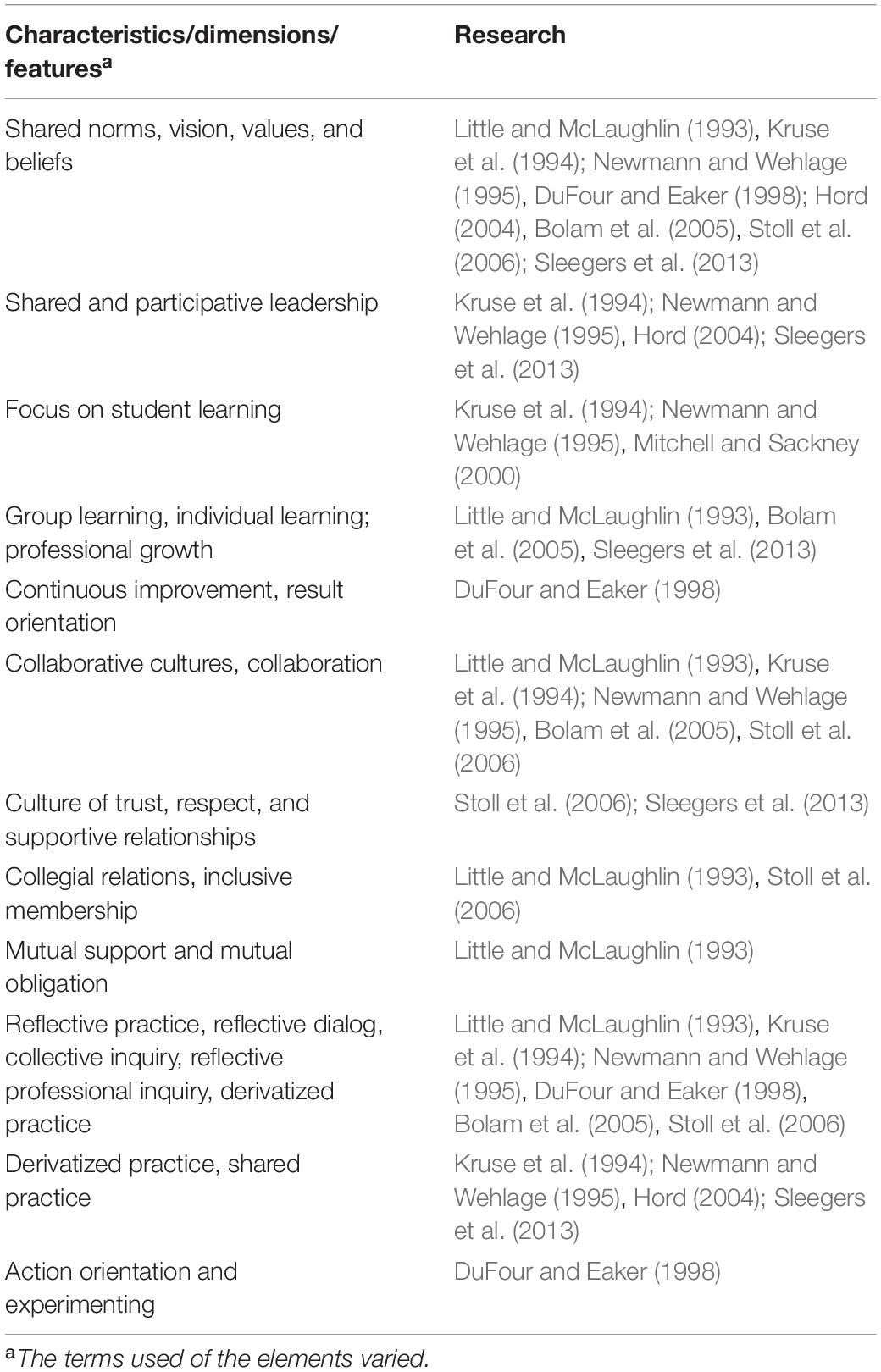
Read the Finland Study, “PLC Characteristics” here.
Read Zachary Herrmann’s article, “Cooperate or Collaborate” here.
Subscribe to the Steve Barkley Ponders Out Loud podcast on iTunes or visit BarkleyPD.com to find new episodes!
Podcast Transcript:
[00:00:00.290] – Steve [Intro]
Welcome to the Steve Barkley Ponders Out Loud podcast. As instructional coaches and school leaders, you are tasked with guiding continuous teacher growth to create student success. This podcast looks to support you with strategies from experienced guests, as well as my own insights that I’ve gathered over the years. I’m thrilled to have you with us. Thanks for tuning in.
[00:00:30.070] – Steve
The purpose when teachers meet. After observing many teacher meetings that were labeled professional learning communities and having lots of discussions with administrators, instructional coaches, and teacher leaders who were responsible for the effectiveness of these meetings, I have separated the focus of meetings that I’ve observed into three categories: professional working communities, PWC, those are places where teachers meet and collaborate to get work done, maybe designing a common assessment or planning field day events for their grade level. PLCs, professional learning communities, are places where teachers are researching and exploring how to get a student outcome that they currently are not achieving. Teachers’ new understanding and learning that comes from PLCs should have a continued payoff in positive student results. And PD, professional development sessions. These are sessions that might be led by an in-district specialist or outside consultant.
[00:01:53.430] – Steve
Often, these are part of a curriculum change or a systemic program. All three of these purposes are valuable. I believe that understanding the desired outcome of a meeting is key to teachers knowing the participatory behaviors that the teachers need to take on in order to produce the desired outcomes from the meeting. Everything being called a PLC interferes with participants being able to focus on the educator learning in true PLCs that leads to increased student success. In a PWC, professional working community, teachers’ collaborative time is spent getting work done, task completed. Historically, most apartment meetings, grade-level and middle school team meetings have been PWCs. I was first triggered to this thought when I realized that in many schools, administrators had taken an activity previously called Common Planning Time and renamed it PLC. Observing common planning sessions, I most often found teachers collaborating by divvying up the work that needed to get done. One teacher planned the fourth grade science unit, another planned the social studies unit, and the third mapped out writing assignments. One algebra teacher creates the assessment for the first unit, while another teacher creates the second. Or each teacher in the department is assigned a topic and creates five questions around that topic for their end of unit assessment.
[00:03:47.400] – Steve
In an earlier blog, I explored Chris Jensen’s views on how teachers, like physicians, can use job sharing to reduce some of the stress issues with workflow. Jensen spent his career both as a doctor in an emergency room and as a teacher of science in a high school. Jensen illustrated how a high school math department developed a schedule for an after-school math support lab. Teachers rotated the assignment of being available in the lab, which was set aside as a fixed room. This provided consistent student support and gave teachers a controlled schedule with their time. Zachary Herman, in an article titled, “Cooperate or Collaborate,” pointed out that cooperative teams are most common in schools. Teachers share resources, coordinate joint efforts, work to improve process, and build standardization and quality. Cooperation can be important in having teachers agree on what mastering a standard means. For example, eighth grade science teachers from two different middle schools, assuring that students enter high school having mastered a common standard. To achieve that result, it takes substantial cooperation. Herman illustrates cooperation: “Teachers on the team delegate tasks to each other to improve efficiencies, such as having one teacher photocopy materials for the entire team or having another teacher build a draft of an assessment rubric for the other teachers to use.
[00:05:46.460] – Steve
Teachers work jointly to prepare activities and lesson plans and grade student assessments together to ensure standard norms and practices are being used across classrooms. All of this activity has the potential to be mutually beneficial to teachers, the school, and the students they serve. However, there is often no understanding of what is occurring in each other’s classrooms as the common plan is implemented.” In professional learning communities, purposeful teacher learning around how to increase student achievement is the focus. Teachers are collaborating, asking the question, what do the students need us to learn? In a research article titled, “Practices of Professional Learning Communities,” three professors from the University of Helsinki in Finland identified 10 key characteristics of effective PLCs. I’ve broken that list of 10 into three groups. In the first group, I placed these: Shared norms, visions, values, and beliefs. Shared and participative leadership. Focus on student learning, group learning, individual learning, professional growth. Continuous improvement, and results orientation. I believe it’s the focus on student learning that is key to PLC’s generating teacher learning that leads to increased student success. As a PLC looks at student learning results or samples of student work, and they ask that driving question, what do our students need us to learn?
[00:07:53.470] – Steve
Listen in on comments that Doug Fischer made during a podcast I recorded with him and Nancy Fray. He reinforces that teacher learning in PLCs changes future practice that impacts student learning.
[00:08:13.810] – Doug
It’s not enough to just come together and say, here’s what we want kids to learn. We have to have those expectations for our students that are high, that students’ expectations for themselves and teachers’ expectations for students are powerful accelerators of learning. Unfortunately, there are just places where the expectations are not high enough. And if we all sit in a meeting and we talk about what we want kids to learn and how we’re going to know they learn it, we could all leave with a different understanding of what the expectation is, what is mastery or competency look like. So we do a lot of checks through our process. Where are the expectations? Are the expectations shared across all the people who are teaching that? Over time, that builds that individual and collective efficacy. That one of the things we attend to, our third value, is around building the collective of the team so that when you leave that collective and you go back to your classroom, to your learning environment, you are highly efficacious. And when teams come together and they have experiences of mastery, when they come together and say, we did this and it worked, when they go through those processes, it builds the collective and the individual efficacy.
[00:09:31.950] – Doug
And those are super important parts. They’re not easy to build. It takes time to build. The research on that one says that as teams develop their collective efficacy, they set higher and higher goals for themselves and their students. And so that relates back to the expectations. Is this a common challenge? Is this thing we’re working on – is it challenging enough? And in the beginning, when teams first start this, they probably aren’t quite as challenging as they could be. But once they have a couple of experiences of mastery and maybe some bicarious experience where they go see each other, they start to have increased efficacy. So we make sure we call out efficacy, both at the individual level and the collective level, and we provide tools for teams to analyze and build their efficacy. As Nancy said earlier, the fourth area is around equity. And one of our reflections working in a challenging community is that most PLC models, in fact, we can’t find any PLC models that directly focus and call out the need to attend to equity. We tend to look at individual kids and whether or not they need intervention. That’s how most professional learning community conversations go.
[00:10:49.470] – Doug
Anthony didn’t learn it, so we’re going to make Anthony go to tier two or whatever we’re going to do. We’re going to reteach whatever. We’re calling for teams to look at trend data. Where are the equity gaps in the learning outcomes of their students? And what are they going to do about it? And instead of always applying the needs like, oh, we’re all going to go to intervention now if you didn’t learn it. Sometimes we need to look at barrier removal rather than always asking kids to go to intervention, sometimes we need to look at the barriers that were in place for their learning and remove those barriers. And that’s a harder conversation to have. We are very much right now focused on individual kids and whether or not they go to intervention or not. Did they learn it? Did they not learn it? And we are asking those professional learning conversations to consider equity and the trend data so that they can start to address some of those bigger barriers to students’ learning.
[00:11:47.540] – Steve
My second group of characteristics from the Finland study includes a culture of trust, respect, and supportive relationships, collegial relationships with inclusive membership, mutual support, and mutual obligation. These items connect to my focus on PLC’s functioning as a team rather than holding a franchise meeting. Cooperation helps franchisees perform better. I describe a franchisee as a group of second-grade teachers meeting, but when they leave the meeting, they go back and run their own second-grade classroom. In PLCs, mutual obligation and mutual support means that the conversation moves from my students to our students. Goals that are set for students are goals for everyone on the team to be focused on, regardless of who’s providing the instruction in which classroom. And the last set of characteristics that I pulled from that Finland study are reflective dialog, collective inquiry, action orientation, and experimentation. I use the term hypothesis formation to describe the outcome of that collective inquiry and action orientation. PLCs, having explored and studied possibilities, form a hypothesis of actions that they can take that they believe can generate the desired success for students. As they implement their actions, PLCs gather evidence of implementation, observe the way their students respond, in other words, what are learners doing, and then they look for indicators of increased student success.
[00:14:05.000] – Steve
I often find that PLCs tackle too many things and therefore, seldom work deep enough and long enough for teacher learning to arrive and impact student learning. When teams need time for a PWC tasks, I suggest they identify a split agenda. The first 20 minutes of time might be a PWC, and the remaining 40 minutes is a PLC. The PWC portion probably has an ever-changing agenda based on current school issues, an individual student and teacher needs and concerns. The PLC agenda should follow a longer term focus, working to learn how to positively impact student learning outcomes. Here’s an example. I developed this with a middle school team from a small K-8 building. The team teaches grades 6, 7, and 8 in all the content areas. They decided to split their one hour a week common release time into PWC and PLC agendas. With the PLC desire to increase student achievement across all the content areas. The teachers developed a theory that if students set personal goals, established a set of behaviors focused on achieving those goals and implemented self-discipline and self-assessment strategies to maintain repetition of the needed learning behaviors, student achievement would increase. That was their hypothesis.
[00:16:05.740] – Steve
The team began by having the physical education teacher present instruction and practice with goal settings. Students identified the needed behaviors to reach a certain goal that they had set as part of a PE unit. Other team members later began implementing goal setting and planning into their units of study. The continuous exploration of the impact of teacher actions on student behaviors and student learning outcomes generated individual and collaborative teacher learning. What is working? What isn’t working? What modifications might we make? For me, this focus on student goal setting would be worthy of their PLC time for the year. What are teacher behaviors necessary to teach, motivate, and coach the development of goal setting skills? What are the initial indicators that students are changing their learning behaviors? Which students struggle most to develop the necessary self-discipline? And how do we, as teachers, support them? How can we simplify processes for student self-assessment? When and how do we teach these skills? What are the first indicators that student goal-setting is impacting student achievement? So much learning to occur from unpacking these common experiences. What value might your staff gain from identifying when they are engaged in PWC or PLC functions?
[00:18:12.560] – Steve
I have placed the links to all the resources mentioned in this podcast in the podcast lead-in. I’d love to hear your thoughts and questions around PLCs. You can reach me at barkleypd.com and thanks for listening.
[00:18:31.470] – Steve [Outro]
Thanks for listening, folks. I’d love to hear what you’re pondering. You can find me on Twitter or LinkedIn at Steve Barkley, or send me your questions and find my videos and blogs at barkleypd.com.