Time for Gratitude

What are you grateful for? A question on a napkin with a cup of espresso coffee.

It’s always the right time to think about gratitude. A post in Psychology Today identifies these benefits:

  • Gratitude opens the door to more relationships.
  • Gratitude improves physical health.
  • Gratitude improves psychological health.
  • Gratitude enhances empathy and reduces aggression.
  • Grateful people sleep better.
  • Gratitude improves self-esteem.
  • Gratitude increases mental strength.

In a recent podcast that I posted for parents on developing gratitude, I shared this statement from Martin Seligman, a well-known researcher in positive psychology.

“Gratitude is a very powerful thing. And when we look at people’s strengths and we correlate different strengths with happiness (gratitude, kindness, prudence, self-control) the single strength that correlates the most with happiness is gratitude. Grateful people are naturally happy.“

In the past few months, I have experienced being on the receiving end of gratitude. Two emails arrived from educators whom I have not had contact with for many years. Both shared some recent advancements in their careers and extended an appreciation for mentorship that I had provided years earlier. Another individual posted a tweet that said it was 10 years earlier that as a teacher she was introduced to PLCs in a workshop I conducted and that lead to her ongoing study and work as an instructional coach today. They all received notes back from me letting them know, “They made my day!” Happiness, generated from the notes, supports me on those days that I am pondering what I could possibly prepare for another blog or podcast, or when I am setting the alarm to start a 3 am (my time) virtual session on another continent.

The research on gratitude identifies that keeping a gratitude journal increases happiness. Sharing your gratitude response and thanks lengthens the impact on your happiness. So, I’d like to take this opportunity to share some things from my gratitude journal.

  • If you value listening to my podcasts and/or reading the blogs, join me in recognizing the talents and efforts of Joe Jacobs who works the sound magic erasing my bloopers on podcasts, Ashley Jankowski who lays out, schedules, and post the blogs and Lorene Malanowski who arranges connecting schedules frequently in three different time zones. There’d be nothing on BarkleyPD.com without the three of them. Thanks!
  • I have great gratitude for all the authors, bloggers, and podcasters who are constantly sharing their research, experiences, and insights. You’ll note that nearly all my posts are peppered with links to the work of others. Sometimes they spark my initial ponderings and sometimes I search for reinforcement or extension of an idea I’m developing.
  • A big thank you to the guests who have joined me on podcasts and at times provided guest blogs. Too many to name here, but I am grateful for all their contributions.
  • I really value the educators in my coaching sessions and virtual facilitations who often make themselves vulnerable by sharing their struggles. They invite me to be a learning partner allowing me to gain knowledge, skills, and insights that I can pass on to others. The opportunity to learn is a gift.

Well, there’s a peek into my gratitude journal. I found this little resource that might spur your thoughts on where to spread your gratitude. It comes from Jeff Utecht at Shifting Schools, who exchanged podcast interviews with me earlier this year. While it offers templates that students could use, I found myself applying the guiding questions to my work with educators.
Thanks for reading. Wishing you a joyful learning and teaching year!


Coaching for Happiness and Well-being

A lot was shared and written about well-being as schools were in the midst of the quarantine. As I interact with teachers, instructional coaches, and administrators today, I’m convinced we need a continuous conscious focus on the topic. Consider these findings prior to the pandemic.

A 2018 report by the International School Counsel shared:

  • Teacher well-being is important for motivation and longevity in the job
  • An increased level of teacher and staff well-being results in increased academic performance and student well-being (Research by Hattie and Yates in 2014 states “Student achievement suffers when teachers become burned out because their focus is on their survival.”)
  • Teachers are less vulnerable to stress if they have practices that enhance their well-being

This quote about happier people from The Guardian certainly suggests investing in encouraging teacher happiness.

“But perhaps most importantly of all, people who are happier are more likely to make a positive contribution to society. In particular, they are more likely to vote, do voluntary work, and participate in public activities. They also have a greater respect for law and order and offer more help to others. There is even evidence that happiness is contagious so that happier people help others around them to become happier too. An extensive study in the British Medical Journal followed people over 20 years and found that their happiness affected others in their networks across “three degrees of separation”. In other words, how happy we are has a measurable impact on the mood of our friend’s friend’s friend.”

So, I pondered, “To what extent can coaching relationships support happiness in teachers?” From my earliest work in coaching, I have been promoting that one of the rewards of coaching is celebration. Years ago, I suggested that teachers build celebrations of perseverance into their classrooms. When a student or students persevered and succeeded, the teacher would throw a 30-90 second celebration. (High-Five, Class Cheer, Teacher Dance). The purpose is to reinforce for students that effort and perseverance generated the success. I realized that most teachers, working in isolation, never get the opportunity to celebrate their effort and perseverance with a colleague who appreciates what they just accomplished. Coaching is an opportunity for that shared celebration.

Martin Seligman, a key researcher in the area of positive psychology, identifies three areas of happiness that I believe can all be addressed through coaching.

  • Positive Emotions – Having positive moments and being able to savor them. Coaching can assist in savoring those positives that we experience in classrooms with our students. Paul Jose shared that savoring is enhanced when we can: talk to others about how good an experience felt, laugh, and giggle about it, tell ourselves how proud we feel. I think that when we can “show off” our students’ success we are savoring our own. Something the performing arts instructors and coaches get to do more regularly than classroom teachers. Coaches’ observations generate savoring opportunities.
  • Engagement and Flow – While flow doesn’t happen in the coach’s presence, as it occurs in a more unconscious form, I think coaching can set the stage for a teacher to engage in ways that promote the possibility of flow. “The state of flow is created by activities with a specific set of properties: they are challenging, require skill, have clear goals and provide immediate feedback. The key to success here is setting challenges that are neither too demanding nor too simple for one’s abilities.” (PositivePsychology website) I am currently coaching teachers who are designing professional growth plans around a hypothesis they have formed for a positive impact on student success. Within the coaching conference, I can hear the teacher setting the stage for deep engagement in their learning. An opportunity for flow.
  • Meaningfulness – “When work is perceived as meaningful, people have a sense of fulfillment and purpose that provides a psychological sense of well-being. The experience of meaningful work and well-being then spills over into the other life arenas and contributes to the overall sense of an individual’s life purpose.” (Happiness and Well Being at Work) I find that it’s easy at times for teachers to get into the minutia of the curriculum, standards, and assessments. At these points, coaches can generate reflection and vision focusing teachers further out into students’ futures. When students are in a university psychology class and asked to write a gratitude letter to someone who has impacted their life and they pick a teacher, it’s unlikely to be because of the course curriculum.

I do think that coaches can increase teacher happiness and well-being. The rewarding part is that the coach will be increasing his/her own. Happy coaching!


Character Point Average

Should students know their CPA as well as their GPA?

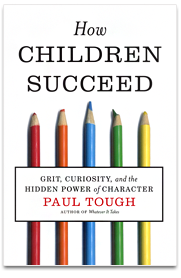
I’ve just finished reading How Children Succeed by Paul Tough, where he poses:

“If you were a college-admissions director or a corporate human resources manager scheduling entry–level employees, wouldn’t you like to know which ones had scored highest in grit or optimism or zest?”
“If you were a parent, wouldn’t you want to know how your son or daughter stacked up against the rest of the class in character as well as reading levels?”

Reporting on work done at KIPP Academy middle school in South Bronx (mostly students from low income Black and Hispanic families) and the Riverdale Country School (tuition starts at $38,500 for kindergarten), Tough shares a list of character elements the two schools chose as a focus.

  • Grit
  • Self Control
  • Zest
  • Social Intelligence
  • Gratitude
  • Optimism
  • Curiosity

These seven were chosen from a list of 24. When asked if these traits can be taught, Tough answers, “I do think they can be taught in the classroom – I think most of us can think of a teacher in our past who helped us develop one or more of those skills”. 

You can view a panel discussion with Tough and others from the book here. NBC News Education Nation: Can Character Be Taught?

The work of Martin Seligman and Angela Duckworth (see earlier blog on grit) feature strongly in this work on character. Tough quotes Duckworth on her view that we need to look at the students as well as the schools when addressing school reform:

“Learning is hard. True, learning is fun, exhilarating and gratifying—but it is also often daunting, exhausting and sometimes discouraging…. To help chronically low- performing but intelligent students, educators and parents must first recognize that character is at least as important as intellect.”

Reading that quote, I found it interesting (based on my recent blog about working or learning) that Duckworth didn’t say learning is “hard work”…. learning itself can be hard.

Dominic Randolph, the headmaster at Riverdale, shares an interesting dilemma; “The best way for a young person to build character is for him to attempt something where there is a real and serious possibility of failure. The idea of building grit and building self–control is that you get through failure.”

To be successful you need to learn how to fail.

This past week I was engaged in a discussion about grading with high school teachers. One conversation concerned whether character (effort) should be included in assigning grades. The struggle is that teachers want to recognize and applaud  effort yet know that in a grade it confuses the clarity of the academic standard achieved. Perhaps a character report card, or profile, or at least conversation could be a solution.

I believe discussions identifying character traits teachers wish to develop (and how to develop) are worthwhile coaching, PLC, or faculty development activities.


Grit and Achievement

Last week’s blog covered some of my thoughts connected with Martin Seligman’s book, Flourish, and connections I made to coaching. I had an opportunity this week to explore another element from Seligman’s work with members of a middle school staff: Chapter 6 in Flourish… Self Control, Character and Grit presents a formula:

Achievement = Skill x Effort which aligns with my formula in Tapping Student Effort

Effort x Ability = Success.  

Seligman spells out how a character of self- disciple is a greater predictor of academic success than is IQ. The ultimate self-discipline character is GRIT… the never-yielding form of self- discipline, an extreme persistence that produces very high effort.

“The more GRIT you have, the more time you spend on the task, and all those hours don’t just add to whatever innate skill you have: they multiply your progress to the goal.” (page 121)

I asked the middle school staff to examine this quote from the work of Angela Lee Duckworth, a student and colleague of Seligman.

“Under achievement among American youth is often blamed on inadequate teachers, boring textbooks, and large class sizes. We suggest another reason for falling short of their intellectual potential: their failure to exercise self-discipline. We believe that many of America’s children have trouble making choices that require them to sacrifice short term pleasure for long- term gain, and that programs that build self-discipline may be the royal road to building academic achievement”(Psychological Science 16(2005):939-44)

You can listen to Duckworth’s TED presentation on Grit here.  When looking at the research of 90 /90/ 90 schools (90% poverty, 90% minority and 90% of the students scoring proficient) it strikes me that educator GRIT is a key. I wonder how that educator behavior might generate increased student GRIT.

How does a school look to increase student self -discipline? What kind of self –discipline would create the student achievement that we seek? The middle school group that I was working with is interested in exploring changes that move students from compliance, “What do I have to do to pass, or get an A, or finish?” to students setting goals and practicing identifying and committing to “what it takes to achieve it”.