Helping

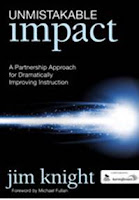
Jim Knight’s new book, Unmistakable Impact: A Partnership Approach for Dramatically Improving Instruction is my current airplane companion. I am just part way in and can already recommend it for coaches and teacher and administrator leaders. In addition to sharing his own insights and thinking, Jim provides extensive lists connecting the reader to other authors and resources.

In Chapter 2 (Partnering), Jim identifies five simple truths about HELPING: Here are his five along with my thinking on each:

1. People often do not know that they need help.

In my work I label these folks unconsciously unskilled. They don’t know that they don’t know-all of us are unaware of some skill set that we are missing. Coaches create awareness. This could be done with data, video clips, modeling, observations notes, student work, etc. When we cause those we are coaching to become aware, we produce discomfort. That discomfort is often the motivation for change. (A stack of photos lead to my decision to start and maintain a weight plan!)

This is especially critical when working with GOOD teachers. Many leaders find it difficult to bring the discomfort of consciousness to these staff members. Being aware that my students could achieve more can make me uncomfortable continuing my current practice and start my exploration of alternatives.
2. If people feel “one down” they will resist help.

Jim states that skillful coaches create equality between themselves and their collaborating teachers. (pg 23). I recommend that coaches avoid using the word help (as in “How can I help?”) unless the teacher uses it first (as in “Could you help me design…?) One common phrase that I use in pre-conferences to avoid help is, ”What role might I play?”. My experiences match Jim’s truth- offering help raises the helper above the coached.

3. Criticism is taken personally.

When you suggest that a person change what one is doing, there is an inherent tug on the ego (“I’m not good enough”). In my pre-conferences I focus on identifying traits and values that are important to the teacher. I look for those items during the observation and share them during the post conference to build teacher ego. (See approval in an earlier blog) This often sets the stage for the teachers to do the thinking necessary for self discovery.

4. If someone else does the thinking for them, people will resist.

I use the “who is thinking” as an indicator of the difference between evaluation and coaching conferences. Evaluators observe, identify, analyze, problem solve, and suggest while the teachers listens. Coaches observe, question, paraphrase, ask “Why?”, and “What do you think?”. Thinking is empowering…asking me to think is uplifting.

5. People aren’t motivated by other people’s goals.

My description is that ideal coaches stop outside the door of the classroom, take off and hang up their agendas, put on the teacher’s agenda and enter. However, the best coaches can do is to work to understand the agenda of the teacher in pre-conference conversations. Then frequently and consciously look at the classroom through the teacher’s lens. An example is the secondary literacy coach who avoids stating to the math teacher, ”All teachers are teachers of reading(coach’s agenda).” She instead identifies the difficult vocabulary that the math text uses, allows the math teacher to describe how students struggle with word problems and share a desire to find strategies to increase student success (teacher’s goal). The reading coach’s goal surfaced as a connection to the math teacher’s goals. Partnership!

When I am asked how to identify teachers who would be successful coaches I recommend looking for people interested in learning about teaching and learning. When I enter your classroom interested in learning with you rather than helping you a partnership climate is easier to establish.


What Does Satisfactory Mean?… What Does it Tell You

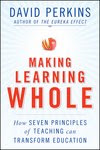
In my last posting I noted that I am reading David Perkin’s, Making Learning Whole. In Chapter 5, Working on the Hard Parts, he examines the role of feedback in learning. He describes the problem with what he calls the hearts-and–minds theory: “Take it to heart, keep it in mind, and do better next time.”

Perkins (pages 80-81) identifies that a hearts-and-minds approach assumes that:

  • learners care enough to improve, even though the class is moving on to the next topic
  • learners will remember the input and use it in the future
  • learners understand sparse feedback and can use it effectively
  • learners will have the opportunity to try again soon.

This suggests to me that much teacher feedback on students’ tests and papers may be wasted teacher time.

Similarly, much administrator time spent in formal teacher evaluations may be wasted time. Consider the following taken from Stephen Sawchucks’ writing for Education Week (6/1 online- 6/10 in print), Grade Inflation Seen in Evaluation of Teachers, Regardless of System.

The districts that employed a binary rating system granted 99 percent of tenured teachers a “satisfactory” rating. In systems with more than two categories of ratings, 94 percent of teachers received one of the two highest ratings.

The evaluations also appear to have failed as a method for offering professional development tailored to individual teachers’ needs. Seventy-three percent of the teachers surveyed said their evaluations did not identify an area for development. Only 43 percent said the evaluations helped them improve.

Nor did the systems serve to remove ineffective teachers. For instance, only 10 percent of Denver schools missing standardized-testing goals under the federal No Child Left Behind Act issued an unsatisfactory rating to a teacher over the past three years. Yet 81 percent of administrators and 58 percent of teachers in the districts surveyed said a tenured teacher in their school was performing poorly, and 43 percent of teachers said a colleague should be dismissed for poor performance.

Many of the administrators may be practicing a heart-and–mind theory of feedback.
“Take it to heart, keep it in mind, and do better next time.”

Perkins shares (page 84) that one of the dilemmas of ongoing assessment for teachers is the lack of time. Teachers do not have the time to provide all the feedback that students need for quality learning. He suggests that students evaluating one another’s work and evaluating their own work with rubrics can provide valuable feedback. He believes that students can learn as much from assessing as being assessed.

I’m personally convinced that when students take some responsibility for each other’s learning, student achievement increases. The teacher’s role is to orchestrate that interpersonal relationship.

Principals face the same time dilemma in getting sufficient feedback to teachers. So developing the interpersonal relationships of teachers in professional learning communities and peer coaching becomes a critical administrator responsibility.

Last summer, I shared that teachers at the Enka School in Istanbul, Turkey had completed training in coaching and begun initial practice. Here is one teacher’s recent report that illustrates receiving additional feedback and perhaps more importantly increased reflection from coaching.

I benefited from both coaching and being coached. My coach made me see some missing points in my teaching. With the help of my coach I could change some strategies, try them and see the best regarding my class’ needs.

For the coaching part, I could see different strategies and methods. I had the chance to compare different classes and teachers. It also improved my teaching and made me see things from a different point of view.

So, I think the students will gain from our coaching/being coached experiences.

Cross department coaching may be useful. Depending on the subject of coaching, we can learn alternative approaches from other departments.

But above all, we need more free time to spend enough on coaching.

I am quite sure that administrator time and effort invested in promoting peer coaching will produce greater return on investment than most formal evaluation activities. Similarly, teachers designing student to student and student self assessment activities will create more learning than grading papers.